I am Vijay, working with Indian IT industry.
Passionate to write on topics like International Conflicts and Peace,Science and Technology,Anthropology.For last 15 years,following intensively on Indo-Pak relations,Kashmir Conflict,Afghanistan Insurgency/Taliban.
Strongly believe in Henry Ford learning quote
"Anyone who stops learning is old, whether at twenty or eighty. Anyone who keeps learning stays young".
5G is the buzzword for the last few years in India. The hype that it created like “the movies of size 2GB can be downloaded in a few minutes” is everywhere for the last few years. 5G based mobile phones are in the market from 2020 and even low-cost 5G phones of less than 15000 INR there in the market. But why are customers not able to use 5G based mobiles in India. Until now no service providers are announcing their 5G services to customers. There are several reasons for this. Few of them are discussed here
Usecase for 5G
Mobile wireless communication has evolved from 1G to the current 5G technology. Every evolution has improved voice quality, data speed, and reliable communication from the previous generation. Data services have been introduced from 2G. Since 3G, every transition saw a major leap in data speed & this data speed transition was a talking factor in every progression. When 3G got introduced in 2010(in India), it provided enough speed to view YouTube videos(SD resolution) without any interruption and eased to use of GPS in mobile phones. Thanks to JIO, 4G got widely adopted after 2016. This helped users with videoconferencing, viewing HD youtube videos, and watching OTT streaming platforms with much ease. Recently introduced 5G is advanced and it is 60 to 120 times faster than its predecessor 4G. Low latency is one of the important features of 5G which helps in achieving this speed. Due to 5G’s low latency strength, millions of devices can be connected within a square km. data transfer close to 100Mbps between devices can be achieved.
Though 5G is a very advanced and very high speed, real use cases with 5G are complex and will take more time to deploy in the user environment. For example, one of the 5G use cases is the efficient implementation of the connected cars technology. In connected car technology, the vehicle is always connected to the internet via an embedded chipset or SIM inside the vehicle. A connected vehicle can send/access the data in the cloud, download software updates, and connect with other devices(IoT devices). With multiple sensors in the vehicle, the vehicle can share its current location, driver behavior, engine diagnostics, and vehicle activity (telematics) & surrounding environmental conditions to the cloud. This different collected/processed information from the cloud can help a driver and other passengers inside the vehicle. These include safety, entertainment, vehicle management, breakdown prevention, and many more
Big data transfer speed associated with 5G helps to assist the drivers, and passengers inside the vehicle in quick time. Example: Real-time monitoring of the vehicle’s part and a back-end algorithm predicts breakdowns associated with the part. This can be informed via phone, SMS, or push notification from the cloud.
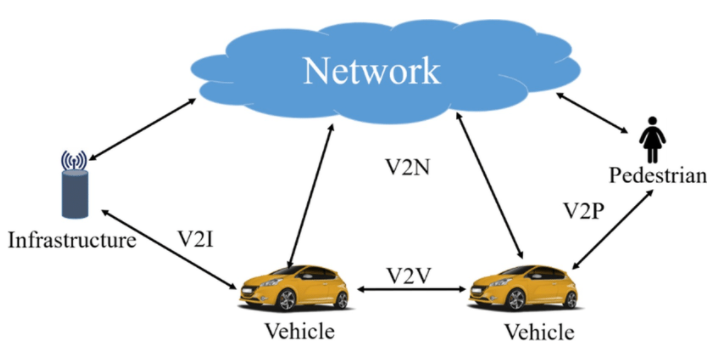
Currently, in India connected cars adoption itself is in the infant stage, so it will take at least a decade to get mature. Though there are few vehicle manufacturers like MG that started releasing connected SUVs to market. Still, we are several years away from building full 5G based connected vehicles, as apart from in-vehicle technology, vehicle to infrastructure(V2I) related connectivity needs to be built from scratch. This V2I helps vehicles to communicate with road infrastructure and share/receive information such as traffic/road/weather conditions, speed limits, accidents
As like above-explained use case, though 5G has several advanced use cases like smart cities, autonomous vehicles, sports broadcasting, immersive entertainment, it may take several years to get adopted, unlike 4G for which it took only a few years.
Base station upgrades
Traditionally base station in wireless communication is used for connecting different wireless devices. These base stations nowadays are small and lie even in our housetops also. Since 5G technology (for higher speeds) uses higher frequency radio waves, different than earlier 4G LTE standards, base stations need to be revamped for 5G standards. Like its old predecessor 4G, 5G too can operate in low and mid bands of spectrum, but the speed associated with the 5G comes in higher bands of the spectrum(mmWave)(up to 20Gbps possible). To update the current 4G LTE-based base stations to 5G, multiple modifications like an additional set of antenna arrays, and transmitting devices are required. Since 5G differs significantly in the spectrum, modulation technique, these modifications are needed.
mmWave based 5G:
Though mmWave which operates in a high band spectrum of 24Ghz — 40Ghz, helps to achieve max speed, it travels very short distances, also signals get easily lost/blocked in case of obstacles like trees. So 5G operating in a high band(mmWave) requires more towers when compared to its predecessor 4G. Small cell technology can help to alleviate some of the problems associated with mmWave based implementation.
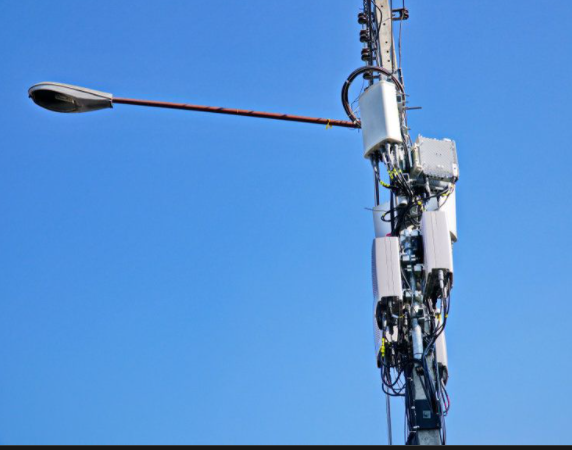
Small Cell tower implementation in lamp post
These small cell-based towers are low-powered and don’t require much power like 4G. they can be positioned in ordinary places like street lights, traffic signals, electric poles. In India, small cell-based tower implementation is still in a very nascent stage. There is no framework yet initiated by the government for placing small cell towers in more affordable locations. Theoretically, small cell towers operate under permissible RF radiation levels. More study is needed in India before implementation in densely populated areas. Cellular Operators Association of India(COAI) is currently working with the government on defining the places where these small cells can be placed. The addition of more small cells will not be cheap, it adds further burden to carriers like airtel, Vodafone during the initial implementation. Since delicensing of mmWave is still under discussion mmWave based 5G is still a far dream. Even in developed countries, mmWave based implementations are limited and currently
Sub-6Ghz based 5G — India’s best choice:
Sub-6Ghz based 5G operates in mid-band between 2.4Ghz — 6Mhz. Though sub-6ghz based cannot produce enough speed like mmwave, it is better than 4G LTE in speed terms. China has rolled out sub-6ghz for its population. For India, sub-6Ghz is more suited(for now), and currently, all service providers favor sub-6Ghz due to the limited cost of 5G upgrades and more affordable to the users. Even most of 5G based mobiles currently in the Indian market are based on sub-6Ghz based.
Security challenges
5G’s major use cases are associated with artificial intelligence, robotics, and autonomous vehicles. All these use cases involve millions or even billions of devices interconnected and data in order of terabytes are transferred between them. Also, the nation’s critical infrastructure and safety-critical systems including water supply, electricity, hospitals will be interconnected using 5G in the future. There is a security risk that these millions of devices (connected under 5G) can be compromised in a very quick time in case of any hostile nation wants to wreck another country. As a consequence, countries cannot view 5G as just another leap in telecommunications. Nations view 5G’s strategic technology as critical national infrastructure.
RAN — Radio Access network is part of wireless infrastructure. It includes antennas, base stations, and much more and it connects networked devices like mobile phones and autonomous vehicles to optical fibre internet. Conventional telecom equipment manufacturers like Nokia, Huawei, and Ericsson come with RAN architecture proprietorial to them. Hardware parts are not interoperable between different equipment makers. Switching the existing network to another manufacturer for equipment will cost billions, making wireless carriers remain withcorresponding equipment manufacturers locked for years or even decades. Hardware and software associated with telecommunication technology were earlier dominated by western, European countries, but in recent years Chinese telecommunication equipment are deployed at a much larger pace in developing countries due to its cheap cost.
Chinese has successfully built 5G solutions end to end catering to different use cases like video surveillance, artificial intelligence, Due to geopolitical tussles, already countries started using either their indigenous telecommunication solutions or solutions from allies. Australia recently banned Chinese 5G solutions, primarily from Huawei-based 5G equipment. Australian national security team was able to unequivocally conclude that 5G based on Chinese was a clear security risk, an entire national grid of telecommunications can be made useless in case of any war.
In the case of India, many of our current telecommunication equipment (for 3G/4G) associated with service providers like BSNL, Airtel, and Vodafone are based on Chinese origins like Huawei and ZTE. Though recently India didn’t allow its service providers like Airtel, Vodafone to use Chinese equipment for 5G trials(in May 2021), Neither India still didn’t have any blanket ban on Chinese equipment like the US or Australia nor it didn’t formulate any committee to study the ill effects of Chinese equipment (like the UK or Australia did) for telecommunication carriers. Recently another service provider namely JIO announced their entire 5G solution will be indigenous was encouraging
Spectrum allocation, Initial investments, and ARPU cost
Spectrum auctions happened in India over the last several years related to 2G,3G, and 4G. Spectrum auctions are lifelines for service providers. GoI owns the spectrum of airwaves and its auctions to various service providers. These frequency bands related to the auction include 900Mhz to 2400Mhz. In the last few years, GoI could not get the expected spectrum price. For example, in 2016, GoI expected 3.92 lakh crore from auctions, but after the auction, it was able to grab only 60000 crores. Telcom companies are already facing increased financial stress due to disruptive prices. There is more doubt about how successful, the auction will be for 5G if the government sets a very increased price like in 2016. Along with costs needed for revamping the 5G infrastructure, this spectrum cost will further burden service providers.
ARPU an acronym stands for Average revenue per unit. It is used by telecom companies to identify the profitability generated from each of its users or subscribers. Service providers can increase their capital investment only if ARPU increases. In the case of 5G, for the Indian market, there is still a dearth of 5G based use cases. ARPU increase for a typical period w.r.t 5G, is still unknown. This adds another risk to the service providers. Since the initial capital investment for 5G is big & financial liability for the 4G to 5G transition is already adding more stress to service providers if the ARPU didn’t improve for a service provider in the specific period. It will create a big risk of closing the service itself
Conclusion:
5G technology cannot be seen as an incremental improvement, it is fundamentally transformative and disruptive for multiple businesses. As more countries incorporate the 5G, India can take a cue from countries like Singapore, Egypt, China, and Hongkong for efficient implementation. Though 5G can enable digital transformation to build a better-connected environment, its path of transition from 4G to 5G involves multiple challenges as explained here.
Disclaimer: Opinions expressed within the content are solely the author’s and do not reflect the opinions and beliefs of the website or any company
In the current Ukraine Russia crisis, it is visible that India currently stands with Russia indirectly. By abstaining from voting in the UN security council (UNSC) as well as the General assembly, India appears to stand with its time-tested partner. Western countries especially the United States (US) and its allies now questioning India for not morally supporting Ukraine at the time when it is invaded by Russia.
United Nations General Assembly on March 2, 2022, brought resolutions to reprimand Russia for invading Ukraine and demanded that Moscow stop fighting and withdraw its military forces. In the voting process with 193 member states, 181 participated in the vote. Of those, 141 countries supported the resolution condemning Moscow and five were against it - namely Russia and a tiny group of its allies - Belarus, Syria, North Korea, and Eritrea. 35 countries abstained, including India, China, Pakistan.
In the interests vs principles dilemma, India has chosen the interests owing to the current tense south Asia geopolitical environment as well as the dependency of its defense equipment on Russia. While after the 2000s there have been significant improvements in India-Western relations, India still maintains an age-old policy of strategic partnership with Russia. There is not much change in the policies followed concerning Russia from Nehru to Modi.
Kashmir Veto & Russian strategic support
After the 1948 Kashmir war, Both India and Pakistan were searching for partners in UN councils to support them, for their respective Kashmir stance. During the initial decades, the US aligned with Pakistan and asked both India and Pakistan to resolve the Kashmir problem mutually. From in US geopolitical view, resolution of the Kashmir issue can bring India and Pakistan together, these both countries latter can be used as frontline states against communist China. For nearly 40 years, all the American presidents tried to resolve the Kashmir problem in a way India opposed. During the period of American presidents Harry Truman & John F Kennedy, efforts were most serious. Prime minister Nehru once told in frustration “I am tired of receiving moral advice from the United States.”
Due to above mentioned American maneuvers in favor of Pakistan, Nehru’s India started tilting towards the Soviet Union, officially the Union of Soviet Socialist Republics (USSR). In 1955 USSR Chairman Khrushchev and Prime minister Bulganin visited India and they traveled across the length and breadth of India including states like Punjab, Jammu, and Kashmir, Tamil Nadu. When these leaders traveled to Srinagar, Khrushchev proclaimed in a public meeting that “Moscow was just across the border and if there is any trouble in Kashmir, Delhi should just give a shout”. This remarkable visit was the foundation for India-USSR Relations. This foundational moment was akin to the moment when Pakistan transferred Shaksgam Valley to China paving way for Sino - Pakistan strategic relations.
Though Russia exercised several vetoes in UNSC, its 100th veto in UNSC was in support of India’s position on Kashmir. When Western countries brought “Irish resolution” which urged India and Pakistan to enter negotiations for settlement of their dispute on Kashmir, the Soviet Union exercised 100th veto to block the resolution helping for India’s position.
When Sino – the Indian war happened in 1962, USSR stayed neutral maintaining “India is our friend, but China our blood brother” stand. USSR was diverted and distracted by the “Cuban Missile Crisis” in 1962. During the India - China conflict, the Soviet Union could not contribute much, as the two superpowers themselves were involved with potential nuclear conflict. Meanwhile, John F Kennedy, US president, informed Nehru that US military assistance can be possible only if India talks with the Pakistan military regime for the Kashmir resolution.
During the India-Pakistan war of 1965, when Pakistan was using the latest shiny weapons of US origin (including the F104 Starfighter fighter jet), India was left to use generations-old British weapons on the battlefield. Though the war ended in a stalemate and more favorable towards India, there was a complete change in foreign policy with India coming out of non-aligned policy. Lessons learned during the Sino-Indian war of 1962 and the India-Pakistan war of 1965 enabled India to establish strategic relations with USSR during Indira Gandhi as Prime minister. Defense modernization & reforms during the years after 1965, paved the way for stellar performance in the 1971 war for India. The Soviet Union has an important role in it.
Though India in the last two decades had steadily moved towards western countries, a significant fraction, nearly half, of arms and ammunition in Indian defense inventory are still of Russian origin with a significant portion that are decades old of soviet origin. Nearly 60% of the Indian defense equipment is of Russian origin, more of vintage USSR origin. Close to three-quarters of the Indian Air Force depends on Russia for its war equipment including, but not limited to Fighter jets SU-30MKI, MIG 29, Helicopters Mi-17 & recently acquired Air defense missile system S400. Russia played important role in the building of India’s nuclear submarines like INS Arahant. With INS Arahant abilities, India’s nuclear triad capability was accomplished in August 2016.
India’s UN abstentions
After 2000, When western nations brought resolutions against Russia in various UN councils, India remained neutral and abstained mostly on all occasions. On some occasions, they embraced Russia’s interests. Some of the instances include when UNHRC tried to adopt resolutions against Russia for exceeding the use of disproportionate force in the Second Chechen War, India voted against it. In May 2008 when a resolution was brought up in UNGA to recognize the right of return by refugees who were displaced in a Moscow-backed secessionist campaign in Abkhazia, India sided with Russia along with nine others including Iran, North Korea, Myanmar, Sudan, Syria, Venezuela. India again abstained in the March 2014 UNGA voting which was to uphold Ukraine’s territorial sovereignty and denounce Russia’s annexation of Crimea. In 2016, when Syria’s Assad regime was bombing Aleppo mercilessly with Russia’s support, a Canada-led resolution was brought up in UNGA, India followed a similar traditional approach(abstaining) this time too saying, it does not mix humanitarian issues with political issues.
In some instances, Russia too voted against India or remained neutral. Those few instances include when the security council brought a resolution against India & Pakistan for a nuclear test. Russia under Boris Yeltsin supported this resolution saying, “India has let us down with its explosions”. He just stopped calling strong action against India with these remarks. Another instance happened in 2019. when China brought a UNSC resolution against India for removing article 370 in its state Jammu & Kashmir, Russia remained neutral without issuing a veto, thus safeguarding its interest with China and Pakistan. US and France had brought down the resolution with their veto power.
Geopolitical situation & Thucydides Trap
Thucydides Trap — a popular term coined by American political scientist Graham Allison, frames the current relationship between US and China. As per the term, the current emerging power is China and it seems to challenge the existing superpower US as an international hegemon. To contain China, the US has framed several initiatives like the Asia Pivot policy (which is obsolete from the Trump era), QUAD. Currently, India is one of the most strategic allies for the US and its active participation in strategic groups like QUAD had increased tensions between India and China in the last several years. Galway Valley skirmishes and the loss of soldiers on both sides were the tipping points of India – the China confrontation in recent years. In case of any immediate conflict between India and China, it needs USSR equipment that includes maintenance and spares for the war equipment. Western nations cannot address this shortcoming in foreseeable future.
Pakistan Russia relations were also increasingly becoming more stable and closer in the last few years. Russia maintained an anti-Taliban stance similar to India until 2012. Now in the last few years, Russia has maintained a Taliban’s sympathetic stance aligning with Pakistan’s stance. When Sergei Lavrov(Russian Foreign Minister) visited Pakistan in April 2021, he told his counterpart “I came with a message from my president that tells Pakistan we are open for any cooperation; whatever Pakistan needs, Russia is ready for it”. Pakistan foreign policy analysts and commentators observed this as a blank check offered by the kremlin towards Pakistan. Russia can use this as a trump card with India if India moves away from Russia opposing it in the Ukraine front. India is aware of this sensitivity.
These Geopolitical limitations might have turned out to be another thorn in the last few years concerning Russian relations. It would have made India not oppose Russia in UN councils, from the time it invaded Crimea to the current Ukraine crisis.
Conclusion
Putin’s plan in Ukraine hasn’t gone as planned. Kyiv didn’t fall in a week as expected by many international experts. Russia is not able to achieve what the US achieve in the 1991 Gulf war or 2003 Iraq war, where the US swiftly was able to topple the governments in a few matters of days. War is still raging on the outskirts of some main cities including Kyiv. Western pressure may increase on India in the coming days with no cessation of fighting between Russia and Ukraine. India following the traditional approach for the last several decades has reached an inflection point. It should introspect whether it should follow a similar fence sitter approach in the coming years or embrace more western countries for its defense and technological needs. For India, Russia is a time-tested friend and partner, but these factors alone should not stop India from taking a principled stance on international laws & sovereignty. India’s western allies are growing exasperated day by day on India’s silence and approach. US president Biden’s recent displeasure that “Washington is in still unresolved consultations with India” is one proof of that. India’s strategic partnership with the US in the last few years has increased a lot. Exports to western countries including from traditional textile-based products to software exports had increased in the last few decades. The US may use this as a trump card to force India to fall by its side in the coming days. India requires deft diplomacy in need of the hour, to balance defense needs from Russia with western countries’ support for any future Chinese conflict. India after evacuating its citizens can open a humanitarian corridor to support the Ukrainian citizens who are currently suffering from war. This can improve the moral image of India in the long term.
It was a tsunami! Tsunami never announces its arrival, but whenever it crosses the shores, it rips whatever there triggering devastating impact. Similarly, during April 2021, COVID second wave was creating dreadful impact throughout India. A Tweet of BBC’s Nicola Careem about the condition of Delhi was heartbreaking and shook me to the core. News about lack of oxygen support, collapsing health care systems pushing people to limit of human endurance was frightening.
I got COVID19
In first week of May 2021, Tamil Nadu government had announced complete lockdown to tame the rising covid numbers. Every morning when I woke up, I always get distress news & ferocity of the second wave. At this instant, I believed lockdown and arrival of vaccines (at very nascent stage) can save me & my family from catching covid. But bad news arrived in middle of May. On May 16, 2021, my wife reported unusual fever. Fever did not subside with normal Paracetamol drugs. Next day we took RT-PCR test, she was reported covid positive. Within next 2 days, we (me and my kids) felt same symptom and were covid positive as well.
Real Challenge
Fever for my wife did not recede even after six days. When I called a private hospital for admission, doctor picked the call and enquired symptoms of my wife. I informed that my wife has had fever for the past seven days. Doctor yelled at me immediately “Why you didn’t get admitted even after having fever after 5 days, you are careless person”. “Admit immediately, she requires steroids treatments”. “Arrange me Remdesvir from outside for advanced treatment ASAP”. These were the words from a doctor.
In those days, obtaining Remdesvir from outside was complicated due to two main reasons. One: Since COVID19 crisis was peak at that time, demand was huge as common public believed this drug was magic bullet for covid. Two: TN government allowed to procure this drug only from govt hospitals personally by someone related to a covid affected patient. This was to avoid hoarding by private hospitals.
Getting scared by doctor tone, I left the option of private hospital. I started exploring for government care centers. Govt centers were overcrowded and getting admission was very tough that time. Personally enquired Tamil Nadu established call centers to arrange a bed. They asked me to wait one more day. At this moment, running out of options, reached to a friend inside secretariat for help. Help came in few minutes. A Senior Doctor & a Nodal officer of one of Govt care center called me and asked me to come immediately to care center established in Chennai Trade Center. Finally, there was good news.
When I took my wife to care center, there were guards at gates of care center who appeared more like thugs than normal guards with plain clothes. These guards refused to allow me inside. They threatened at me “Run away, No recommendations works here. You don’t belong to this area. You live in different area, go there”. We felt helpless again. After some brief conversions between police officials and the doctor who asked me to come here, we were allowed inside, and my wife successfully got admitted.
Next day, my condition got slightly deteriorated as well, with an oximeter reading of 93/94. My sons and I were still in home care. As fever prolonged for long time for me, I too decided to get admitted in same care center. Now finding a safe house for my kids was another challenge. Since this disease is very contagious, leaving them in relative or friend houses was near impossible. Situation was worse that my family and we even explored of sending my kids temporarily to an orphanage which was specifically taking care of kids for those whose parents affected by this disease. We spoke with few kids care centers regarding this. Thankfully one of my relative who was earlier affected with covid accepted to take care kids.
Period of Uncertainties
In basic care center, we were provided first line therapy for first few days. Irrespective of this, our oxygen levels fell below 90 on the fifth day. And we were asked to go for critical care center for treatment. We arrived in critical care center at night 2AM on the sixth day. We were brought to hospital in an ambulance. We were put under oxygen support immediately. I felt breathing issues for next few days. My blood tests showed my immune system was overreacting. Whenever I removed my oxygen mask, I observed a strange suffocating cough, originating in the upper abdomen.
After spending six days in critical care center, my wife and my conditions improved, oxygen levels returned to 93/94. Those six days made us feel that we were in war front. On a daily basis we were saw more and more sad stories around our bed. Nearly six people succumbed due to severity of disease. Every day there were poignant scenes like group of doctors running towards severely ailing patient at midnight, trying to revive them & relatives weeping at other end. At other instances there were relatives of patients losing their cool and shouting at doctors, crying at them. Doctors advised us to get discharged quickly just to avoid these scenes, as these scenes itself created more fear.
Positive Lessons & return back
First few days were very tough in home after hospital discharge. Due to steroid treatments, we were completely exhausted throughout day. I lost nearly 7-8 kgs. After 15 days, I was able to regain my partial strength. By end of 40 days from hospital, I was able to start my walking exercise. We slow and steadily returned to normal life after 60 days. Friends and office colleagues support played another important role during recovery phase.
I observed two abnormalities when I was hospitalized. My heart pulse was reaching 130 bpm & my oxygen levels were dipping every day. My doctor firmly told me “Both will revert to normal after reaching threshold, you need to wait for that threshold”. And it did revert back. My kids returned to our home after 15 days. My 70-year-old father who adamantly wanted to come to Chennai (even during peak phase) to help us, is now delighted.
May 2 2021 marks 10th year anniversary of Osama bin laden killing. In early May 1996, Ariana Airlines carrying special person called Osama bin laden, landed at Jalalabad of eastern Afghanistan. Decade back, western media praised him as a rebel leader for fighting against soviet union’s Afghanistan occupation. On arrival in Afghanistan, Local warlords who were aligning with Taliban, embraced him with open arms thinking him like a rebel philanthropist. These warlords were confident that the hardened Arab jihadi radicals he brought to Afghanistan, will aid his boss(mullah omar) in eliminating other splinter groups fighting against Islamic emirate of Afghanistan(Taliban), consolidating power in all regions of Afghanistan.
For US and its western allies, bin laden was migraine from late 80’s. From late 80’s, US intelligence was tracking osama bin laden for his role in multiple bombings related to US embassies, war ships in African countries. They were unsuccessful in neutralizing Osama bin laden. He moved swiftly as well as stealthy from Sudan, Egypt, Algeria, many other African countries, finally into Afghanistan. Only country which can give him asylum that time was Afghanistan. Destitute people & marauding warlords living that time in Afghanistan believed he is only billionaire who can give them gifts.
US got important opportunity in 1998 to assassinate him. But he escaped few hours just before, rain of 66 cruise missiles fell on his training camps in Khost. On US investigation it was found that, Pakistan intelligence agencies ISI had tipped off Osama on incoming missile attack from US. ISI was alleged to have played double agent role between CIA and al Qaeda. Enraged Osama wrote bloodcurdling poetry on peaks of Hindukush mountains warning US with more incoming violent attacks.
In 1999, highly radicalized, but tech savvy, elite English speaking Hamburg group members (including Mohammed atta) met & pledged his loyalty to Osama. Osama concluded from first meeting with Hamburg group that they are right choice for plane operations(9/11 attack). 9/11 attack happened in September 2011.More than 3000 civilians killed in the attack. For US, attack was worst after pearl Harbor attack in 1941. It was blot to US, challenging its world’s only super power status that time.
Furious America declared global war on terrorism, targeting mainly Osama and his organization. By September 2002, Osama who once stayed inside caves of tora bora mountains, silently disappeared into Pakistan tribal mountainous area via porous, undemarcated borders. From there he was in constant movement along mountainous towns lying in current Khyber pukhtwana province. Finally he moved to palatial mansion in Abbottabad near Pakistan army training center.
Tracking and eliminating Osama bin laden was not easy job for world’s most sophisticated intelligence(CIA) and its army. Fragments of information were collected for several years (starting from 2002). These information lead to the palatial house in Abbottabad where he was eliminated in May 2 2011. This time, US intelligence agencies kept this operation, completely unaware to Pakistan intelligence agencies. US intelligence didn’t disclose even titbit of information to ISI, fearing for leak of information leading to failure of operation.
Zero Dark Thirty
Film “Zero Dark Thirty portrays the Operation Neptune spear accurately in few instances. Operation Neptune spear planned by US intelligence and army to track and eliminate osama bin laden. This film has accurate depiction of few important events
1. Islamabad Mariott hotel bombing (2008) — Bombing which killed 54 people(45 locals and 9 foreigners), was one of earliest attacks inside Pakistan to target foreigners & CIA employees. Bombing is so intense that it created 20ft wide and 20ft depth crater near entrance of the hotel. Fortunately suicide bomber detonated the explosives at entrance of the hotel. If he had detonated at center of hotel, human losses have been unimaginable
2. Camp Chapmen Attack — In Khost province of Afghanistan, there was CIA base used during mid 2000’s, It was used for intelligence gathering for drone operations inside Pakistan. On penultimate day, a Jordanian man called Humam Khalil Abu-Mulal al-Balawi, was to provide important intelligence related to Al-queda in Khost CIA office. He was believed to be trusted source. CIA officers were unaware that this man now a double agent working with Al-queda. His suicide bombing that day killed 12 CIA officers(Worst attack on CIA in last 40 years). Ramifications of this attack was huge, CIA base was closed indefinitely & intelligence inputs for tracking osama capture were stalled for long period.
One journalist wrote like this on this attack
“In an intelligence war, this is the equivalent of sinking an aircraft carrier in a naval war. The United States can’t afford this kind of loss.”
3. Leon Panetta portrayal — Leon Panetta was CIA director during osama bin laden elimination. Actor who portrayed Leon Panetta looked almost like him, his mannerisms almost mimicked leon Panetta
4. Waterboarding Torture and interrogation: Waterboarding torture was horrifically shown in film. But this horrific torture in 2005, yielded Khalid sheikh Mohammed to confess that he is chief architect of planes operations(9/11 attack), for which he gave blue print to Osama in 1995 and later executed in 2001. CIA still disagrees on this waterboarding treatment
5. Obama’s reluctance to go for operation: When CIA director informed of raid to capture or kill Osama, Obama was initially reluctant to approve the raid. One of reason for this reluctance was, as presidential elections are coming in 2012 , if something goes wrong, his fortune of returning again as president will go awry.
6. Women in intelligence operations: Last, but not least, In History, various female intelligent agents played important role in intelligence operations. Main protagonist of this film is CIA intelligence officer “Maya”, Female lead plays pivotal role in tracking Osama as intelligence analyst. She stands brave during gun attack in Islamabad embassy, Marriott hotel attack.
This is not first time that woman was shown as sharp intelligence woman. In early 1940's(during world war 2) English intelligence agents were struggling with German U-Boat warfare. Germans were using mysterious engima codes as method of communication between naval officers, coordinating u-boat attack on allied forces warships. One important intelligence officer, who stood tall and helped to crack this enigma machine cryptography was Joan Clarke
Conclusion
On fateful night of May 2 2011, Pakistan DGMO Nadeem called Pakistan COAS Kayani at 1AM. He informed kayani that, a enemy helicopter has crashed at Abbottabad. Nervous kayani asked “Is the crashed helicopter not ours?”, fearing for some outside enemy countries targeting Pakistan nuclear facilities. Within few hours, When the Pakistan airforce scrambled Pakistan F16 for shooting down remaining Blackhawk helicopters, US admiral mullen called kayani and informed important message.
Mullen told “ Congratulations Kayani, There is a good news, but there are issues with this also”. Mullen reminded kayani that US has agreement with Pakistan, so that any US president can act unilaterally whenever “Number one or Number two” was located, seeking justice for 3000 killed in 9/11.
Locating and killing osama bin laden deep inside their own land by US was national disgrace to Pakistan. Defense and political leaders felt deep scare after US breached their sovereignty with much ease. Generals who met on morning of May 2 2011, were in similar mood like in 1971(when Pakistan lost its war with India). Pakistan political parties unanimously passed resolution against US in its parliament for breaching Pakistan sovereignty.
There were so many invisible hands, protecting & transporting bin laden, his family inside Pakistan between 2002 to 2011. These invisible hands felt they were let down by Pakistan army, joining with infidels(US). Like second wave of any pandemic, second wave of cruel suicide bombings created havoc between 2011 and 2014, mainly inside Pakistan tribal regions.
Osama daughter once said in a interview that his father was very soft spoken and mild mannered man. She also defended that, he was acting as a buffer between hardliners and other negotiating government agencies, preventing al Qaeda from becoming more violent. As feared earlier, remnants of Al Qaeda switched to most hardline version of Jihad, becoming ISIS in Iraq and Syria in 2014, tying middle eastern region for another 5 years with counter terrorism operations. Still now ISIS exists and may resurrect again. Same Afghanistan may now have high chances of becoming a breeding house for global terror, as US announced its exit & its last troops will leave Afghanistan by September 2021
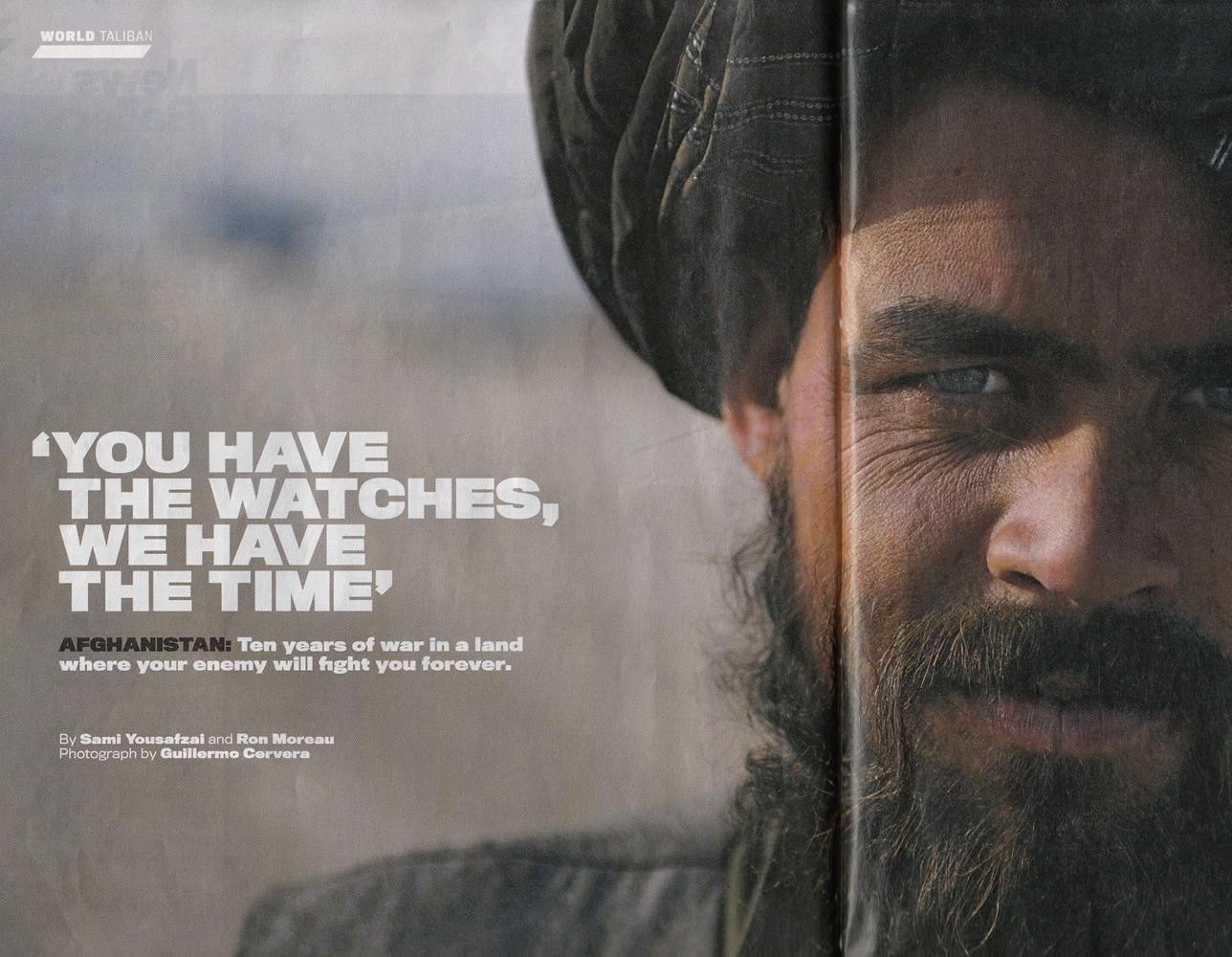
There is a saying in guerrilla warfare, “You have the watches but we have the time”. This quote implies that “ if one side is willing and able to wait for their enemy out, they can defeat vastly big, far superior force”. This happened many times throughout history for different empires, countries. In specific to Afghanistan, it had happened at least thrice in recent history.
History: Britain, USSR, USA
To assert geopolitical influence in entire South Asia, Britain invaded Afghanistan in the 19th century. It ousted the ruling king and tried to control the population. After fighting several years of guerrilla war with afghan locals, Britain retreated with several thousand soldier losses.
Similarly, USSR invaded Afghanistan in 1979, to insert its communist ideology in the religiously influenced country. USSR forces fought for nearly a decade with guerilla forces called mujahedeen. Countries like US, Pakistan, Saudi Arabia, china supported mujahideen through economical & political means. By 1989, Russia left Afghanistan with fifteen thousand soldiers who died in the conflict, counterinsurgency operations.
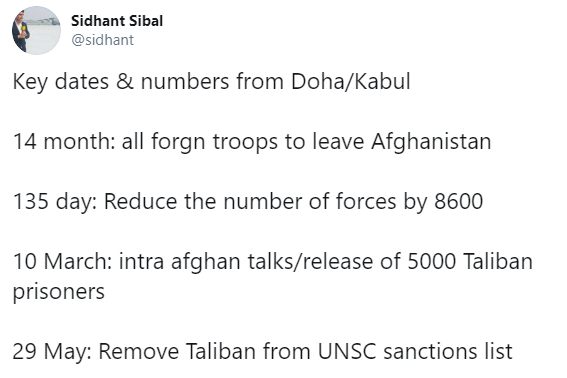
In Sept 2001, there was a terrorist attack in the heart of America (twin tower attack). Nearly 2000 common civilians died in the attack. US intelligence agencies found the plan for the attack was orchestrated by terror group “Al Qaeda” in Afghanistan. After the local government in Afghanistan (Taliban) refused to cooperate in handing over terror suspects, US announced military operations by name of “War of terror”. After nearly 18 years of fighting, a historic accord happened on 29 Feb 2020. With this accord, both the US and local fighting groups (Taliban) reached peace deal, allowing US forces to morally exit from Afghanistan with more dignity.
To date, Afghanistan is a graveyard for foreign forces, who want to govern, control the population. Even financially, technologically, militarily the superior US, has to bite the dust in Afghanistan due to several factors. By mid-2004, US intelligence agencies & security forces believed the Taliban is done and dusted. There was calm throughout Afghanistan with reduced violence. After several decades, presidential elections happened successfully in 2004, electing a new president. But in the coming years after 2004, Taliban & other terror groups regrouped, revived to a stronger position. By 2016, the Taliban officially controlled 50% of Afghanistan. In all these 18 years, 3 US presidents tried their best to suppress the Taliban & defeat terror groups, but all of them unable to achieve what they planned.
Directorate S
Though there were several books in store for “war in Afghanistan”, book named “Directorate S” is one of best, most authoritative, stylishly crafted book, detailing events happened between 2001–2016. Author of this book is “Steve Coll”, 2 time Pulitzer award winner & current dean of much-acclaimed Colombia journalism school. His previous book “Ghost War” explains events happened between 1979–2000 in the Af-Pak region. Directorate S exactly picks up from where Ghost Wars end.
This book explores how the US entered afghan quagmire with raw emotions, to punish all those involved in the 9/11 terror plot. Book’s first chapter starts with Ahmed shah Massoud’s assassination, just 3 days before 9/11 in 2001(saying its Osama bin laden’s gift/loyalty to Mullah Omar, for protecting him inside Afghanistan). The end chapter explains how the entire world in 2016 has no defined solution in the Afghanistan war, even after nearly 0.15 million deaths and so many destructions. This book explains the role of Pakistan ISI’s historic proportions in helping Taliban revival. As per the book, war in Afghanistan majorly doomed because of the failure of the US government in dealing with motivations, apprehensions behind Pakistan ISI. Incidents between 2001–2016 explained in a more nuanced way.
Book has so many interesting topics/incidents like
Ahmed Shah Massoud was the main opponent, fighting Taliban ferociously from 1996. On Sept 9, 2001, Al Qaeda suicide bombers posing as a journalist, detonated explosives hidden inside the camera, instantaneously killing Ahmed Shah Massoud. His death was major blow & shocking news for Indian/Iranian intelligence agencies, as both of them used Massoud for intelligence operations inside Afghanistan. Osama bin Laden orchestrated this attack to appease Mullah Omar. Mullah Omar relived on hearing death news as it will help him for complete dominance inside Afghanistan, but 3 days later 9/11 happened.
After twin tower attacks, US Assistant secretary of state called Musharraf and threatened him saying “ ‘Be prepared to be bombed. Be prepared to go back to the stone age’ incase of non-cooperation from Pakistan. In response to the threat, Pak ISI chief went to Washington just a few days before the US war in Afghanistan. He warned US authorities, advised to not go by raw emotions of 9/11, further saying the war will be stalemate and will end in huge destruction. ISI chief gave an assurance that it will abide by US decision, irrespective of its opinion.
By September 2001, when ISI chief went to Kabul for asking mullah Omar to hand over Osama, there was another message ISI cryptically informed to Mullah Omar. “Attack US hardly, if they start a war”
US generals approximately know locations of Mullah Omar and other commanders. Instead of bombing those locations in swift mode, the US started the war in a traditional way i.e bombing airfields and air defense systems. It gave buying time for Taliban commanders to escape
Taliban, not a simple network, its strength & sentiments lie deep inside rural Pushtun lands of Afghanistan. This same strength and sentiments later resurrected the Taliban more powerfully.
US distraction with the 2003 Iraq war, underestimating Taliban and ISI. Zalmay Khalilzad, US negotiator with ISI until 2004, moved half away as ambassador to Iraq. Later Taliban resurged from this point
Pakistan’s FATA, an alien world inside Pakistan until 2011. It was the heartland of all terror groups(including Uzbeks, Tajiks, Uighurs, Chechens.. so many). Teenagers and kids were easily brainwashed in the name of religion and sent for suicide bombing to various places.
The sudden big rise of poppy cultivation inside southern Afghanistan and uncontrollable drug trade to the outside world. Poppy cultivation before September 2011 was one of the lowest in Afghanistan
Mumbai attacks & ISI planning, ISI association with Kashmir militancy
Osama bin Laden killing operation and after-effects of US relation with Pakistan.Movements of Osama inside Pakistan and some invisible hands protecting him. When 3-star generals met on the morning of May 2, 2011, for a conference, their anger and frustration was worst since the 1971 Indo-Pak war
Accidental burning of Quran texts ( Parwan province) in 2012 & subsequent riots associated with it. After the burning incidents, there was a significant rise of “green on blue attacks”. The killing of John Darin Loftis by a loyal truck driver. Darin one of the key player used for WHAM operations
Obama’s drone campaign and the dragon’s fire from the sky. Victims of drone campaigns and associated politics by ISI/Pak army
Hamid Karzai often complained to US officials to take action inside the FATA of Pakistan. Karzai shouted one time saying, “if you want to end the war in Afghanistan, bombing should happen inside Pakistan and not inside Afghanistan”
The assassination of Benazir Bhutto, mushraff links &alqueda celebrations inside Pakistan saying Benazir loyal asset of CIA
Hijack attempt of PNS Zulfiqar by Al-Queda sub-continent network. The story behind this hijack attempt — a poor estranged Pak navy soldier treated badly by foreign forces. If this hijack attempt was successful, chances were there for a first-ever nuclear terror attack, as the ship was boarded with nuclear missiles as per some sources
Corrupted warlords & their heinous crimes inside Afghanistan, forcing locals to believe in Taliban
Insights into Pakistan army/ISI double games, from the start of chapter
Pakistan army/ISI obsession with India in everything, whenever there is a discussion between US officials and pak/isi generals. Pak generals viewed every event with insecurity from India’s prism
Spike of violent incidents/suicide bombings inside Pakistan after Musharraf sided with the US(War on terror). later it again spiked after killing of Osama bin laden
Tactics/Strategies adopted by various US army generals/diplomats like Flynn, Petraeus, McChrystal, Peter Lavoy, Marc sageman, Robert Grenier, David smith, Kappes, and so many
Tactics/Strategies adopted by various Afghan army/intelligence generals & ruling president includes Amirulleh Saleh, Asadullah Khalid, Nabil & Karzai
Centuries-old bondage between Afghanistan and Pakistan in association with the Pashtun clan. Durand line politics and sentiments explored by ISI
· Finally, lessons learned from the unending war
Conclusion:
For US forces, exit from Afghanistan is Déjà vu to whatever happened in the early 70s in Vietnam. When compared to Vietnamese forces (which were professionally trained), the Taliban is locally organized militia from Afghanistan and Pakistan numbering 10000–20000. The US lost nearly 3000 soldiers in the last 18 years, thousands were disabled. Major beneficiaries of this US-Taliban peace accord were Pakistan, Iran, China, Russia. All these nations now have leverage over Afghanistan via the Taliban. India responded guardedly to this deal. Indian intelligence agencies are already aware of the impact of this deal, as ISI might push the fighters (from Pakistan tribal areas who went inside Afghanistan for fighting along with Taliban) towards Kashmir. Hell will break if this happens, as a similar scenario happened in the late ’90s in Kashmir. The pendulum has swung back again, the Taliban returned again as major power inside Afghanistan. This change will have an impact on future geopolitical events in the region. Fingers crossed
In history, after India and Pakistan became nuclear
powers there were 2 instances where both countries came to brink of full-scale
war. First instance was when Indian parliament, attacked by Pakistan Jihadis.
In this instance, the main target was massacre of Indian legislators.
Thankfully with few fatal casualties, legislators were untouched. Still,
furious India went with operation parakaram, mobilizing tens of thousands of
soldiers towards Pakistan border, placing mines and other war equipment near
border, simulating battle field scenarios. Six months later tensions
deescalated & relations between two nations cooled.
2nd Instance
was on Feb 14 2019.More than 40 Indian CRPF soldiers were killed in VBIED
suicide attack near NH1 highway, worst terrorist attack in Kashmir militancy
history. Suicide attack was so gory that some of soldier coffins contain few
body parts than full body itself. In next few hours/days, pictures depicting
gory of the attack went viral in twitter/facebook enraging Indian citizens.
Opposition parties too questioned the attack whether its because of major
intelligence failure. After nearly 15 days, Indian fighter planes went inside
Pakistan and bombed one of jihadi training base in Pakistan. Pakistan
retaliated back, bombing near LoC. In subsequent dog fight, India lost a
fighter plane and pilot was captured. Thankfully due to intense diplomatic
effects of Saudi Arabia and other world powers impending nuclear war was
averted.
Since today marks 1st anniversary of this
Pulwama attack, this article explores origins of this attack and various
conspiracy theories around the attack.
Arrival of Online radicalization in Kashmir
Kashmir militancy origin can be traced back to 1989.
After several years of dreadful fighting, militancy graph in Kashmir reached
record low in 2014. Number of militants
came down to 50 odd in 2014, when compared to several thousands fighting in
90’s. This phenomena can be attributed to several factors like strong anti
infiltration grid built near LoC, slowly moved India-Pakistan peace process
between 2004-2013, Pakistan’s precarious economic condition & its terrorism
fight inside its own country.
When new government came in 2014, there were hopes the
India-Pakistan peace process will proceed further ahead. But India Pakistan
relations started to go backwards. This has its own effect in Kashmir valley.
When beef lynching’s happened inside Indian main land, there were big protests,
shutdowns in valley. Anger inside once less militancy prone area like south
Kashmir(Pulwama,Kulgam,Shopian) started to rise from 2015. Militancy once waned
in 2014, now resurged and evolved via new way called online radicalization. Militants
who once masked their face and running, started to show their faces via videos
with more fiery speech. Insocial media
driven (twitter/facebook/whatsapp) era, these videos eased communication gaps
between local youths and spread in domino effect. Every militant funeral in
south kashmir attracted thousands of villagers, became fertile recruit ground
for future militants. Words like martyrdom, images of new militants holding
guns, their lifeless bodies after death created new narrative of militancy
inside valley. Few journalists called the places like Pulwama as Kandahar of
kashmir, Tral as Torabora of kashmir, due to dangerous groundswell of militancy
support. Number of local militants surged and encounters between
militants/security forces increased.
This social media driven radicalization started in June
2015 with infamous Burhan wani gang. By July 2016, Burhan wani was killed. But
seeds sown by him was successful in methodical progression of militancy. His
videos created unprecedented number of followers. Death of Burhan wani sparked
major unrest inside valley in 2016. It took nearly 10 months for Kashmir to
return normal. Army camps which were removed previously as part of
demilitarization, now revived in areas Pulwama, Anantnag, Kulgam, shopian.
Jaish revival, Changed 2017 & Operation Allout
In Kashmir militancy, Jaish e Mohammed(Army of Mohammed)
the most dreadful ever terrorist organization. Earlier major terror attacks
like parliament attack, redfort attack, Akshardham temple attack were carried
by Jaish. After 2004, main commanders of Jaish in Kashmir valley, were
neutralized one by one and organization became defunct for nearly decade. In
2014, the number of jaish terrorists in Kashmir was almost zero, but never
completely wiped out, made to lie low by ISI. Seeing the unprecedented
radicalization in south kashmir, ISI put a blue print of jaish revival in south
kashmir. Old militants who were once sentenced and now resuming normal life
were recycled. One notable recycled commander among them was Noor Mohammad
tantray. Through amplified radical indoctrinations, Noor Mohammed built factory
of suicide bombers. Origins of 2017 Pulwama police lines attack, Srinagar
airport attack can be attributed to Noor Mohammed.
Security scenario in south kashmir completely changed and
became worse in 2017. Once sun sets and dark arrive, local people living in vicinity
of shopian, kulgam, Pulwama villages afraid to come out of their houses as
there was high anticipation of violence, encounters. Daily encounters, killings
increased manifold. Through social media & posters, Militants/OGW often intimate
& warn local people not to move in close proximity with security forces. Local
police officers, army jawans were abducted from their homes and killed in
orchards, to instill fear among locals not to join security forcesWhen young local lad Lt Ummar Fayaz was
abducted and killed by militants in shopian, central government signaled
aggressive stance in dealing with militants.“Operation Allout”, an aggressive
approach in dealing with militants was announced in spring of 2017. Cordon and
Search Operations(CASO) & flush outs, which were once abandoned in
2003,were reintroduced in rural
hinterlands of south Kashmir.
Operation all out eliminated many militants ruthlessly
initially. It created fear psyche among young youths who want to join
militancy. Though Operation all out created dip in militant recruitment, but
still it could not stop youths, students joining militancy. Doctorate student
from Aligarh university joined militant rank & later killed. 32 year old
Professor, who has doctorate in sociology & faculty in university, joined
militant rank and was eliminated within 40 hours.
Crowds Disruption – a new tactics
By the time when operation allout was yielding some positive
results for security forces, a new trend started to morph during encounters and
CASO’s in late 2017 & 2018. Massive crowds which often show their presence
during militant funerals, started to move dangerously close towards the
encounter site. In this some were involved in stone pelting to disrupt the
security operations. These crowd not only involve in disrupting security
operations, but often help militants to escape. Hours after militants escape,
videos showing dramatic escape of militants will appear in social media.
Villagers who helped militants to escape often pride among themselves for the
act. Security forces despite having advantage of aerial surveillance (using
drones, choppers) & tight deployment, could not able to stop militants escaping with help of
assault mobs. This worrying trend made many A+ grade militants, escape from
security dragnet for quite long time.
Crowd mobilization on the encounter sites happens through
whatsapp groups, announcements via mosques and through word of mouth. During
CASO’s, security forces movement details were passed and shared among these
whatsapp groups, effectively mobilizing big crowds, pelt stones and helping
militants to escape. There were circumstances, where stone pelting youths
travelled from multiple miles to encounter site, to save militants. Crowd
disruption was major headache for security forces, it gave edge to the militant
outfits. Security forces already in active combat mode, has new burden of
controlling this law and order situation. To curb mob mobilization and stone
pelting, government suspended the internet in the areas where encounters
happens. Nearly 300 whatsapp groups which were used to mobilize stone pelters
have been shutdown. Few group administrators of locally operated Whatsapp
groups were identified, counselling has been by police. In encounter sites,
CRPF were deployed to control law and order situation. These measures yielded
positive results. Though these measures didn’t completely stop the crowd
mobilizations and subsequent militants escape, it drastically reduced the
militants escape success rate.
Sufferers of Operation Allout
when operation allout progressed through rural
hinterlands, human toll due to deadly battles was heavy. 300 militants were
killed, mostly locals including top commanders eliminated. Local civilians who
tried to disrupt the encounter operations were killed in cross duel between
militants and security forces.At least 140
civilians, mostly youth, have also been killed and hundreds of others either
blinded or injured in protests near encounter sites.Nearly 250 security forces, including Army, paramilitary and
police, have also been killed in the attacks and gun battles during the same
period. Houses and other huge material property belonging to Kashmir’s working
class and peasantry have also been destroyed in the encounters, as security
forces used heavy mortar shells and explosives to neutralize defiant militants
stuck in localities. In this period, significant number of political workers,
alleged informers were tortured and killed by militants
Operation All Out also enhanced
military concentration in south kashmir. Many new Army camps, paramilitary and
the SOG have been established at various locations roughly a distance of five
kilometers separating each. Residents privacy has been routinely breached, people
of all ages has been frisked during CASO’s.
Pulwama attack
In subsequent encounters, Jaish chief
masood azhar’s nephews Usman and Talha were killed in 2018. There was high
anticipation among the security circles for spectacular terror attack in 2019,
avenging the jaish chief nephew killings. Reports were circulating in national
media that afghan war veteran has successfully infiltrated the Kashmir. He is
expert in IED making and going to avenge the killings.
By 3:00PM Feb 14 2019, local suicide bomber rammed the security
convey with VBIED. Attack was worst in history of Kashmir militancy, as neither
of any single attack yielded these many fatalities. Jaish released video of suicide
bomber confining to the crime. Indian public enraged, balakot strike happened,
followed by Abinandan capture and release. In the first year anniversary, it
was found NIA Pulwama probe has reached virtual deadend. Militants & OGW
who coordinated this attack was either killed or captured. NIA could not able
to conclude the mastermind of the attack, as there was no solid information
Conspiracy theories & Intelligence failure
After Pulwama attack, government was heavily criticized for intelligence
failure. JK police explains the suicide bomber was grade c militant. In Kashmir
militant/terrorist classifications, Grade A,A+ militants are higher priority,
CT operations are planned on them. Intelligence networks heavily tracks these
militants to neutralize. Intelligence networks are more concerned about
decapitating the leadershipwhich these grade
A,A+ militants own. Grade c militants are generally fresh recruits, many are
few days/months old.To escape from the
intelligence radar, jaish targeted these grade c militants for heavily radicalization
and preparations for suicide bombing operations. One among them is adil ahmed
darwho completed his mission on Feb 14
2019.
One of the mystery is how such large amount of RDX could have been
smuggled into valley from Pakistan through border, keeping the
military, CRPF, BSF, police, and intelligence agencies entirely in the dark. There
are reports that some explosives might have been moved in bits and pieces from sand
quarry via locals.
Conclusion:
Pulwama suicide attack was not first suicide attack in Kashmir. In
2001,16 year old Srinagar boy belonging to jaish drove a car, full of
explosives into Kashmir legislative assembly complex. Bombing killed 38 people
including civilians and security forces. After 18 years, suicide bombing returned
to Kashmir in Pulwama. Depth analysis needed to understand what made the
suicide bombing to vanish and reappear in gruesome way after 18 years.
There was peace process between India & Pakistan. Once it
started to dried up, Militant violence and disturbance across LoC started to
increase in incremental way. Ceasefire violations, fidayeen attacks, momin
mujahideen(guest fighters from Pakistan) in villages, IED attacks,finally
suicide bombing returned gradually one by one.
Suicide attack site in 2020, the patch in the road show extensive damage occurred in Feb 2019
Pic Courtesy: Ieshan wani
Mainstream political parties like NC, PDP, once acted as bridge
between India & pro independent/Pakistan separatists. After online
radicalization and trust deficit of these parties with locals, these parties
too lost their traditional support base. Generations changed and current
generation believe more in militant voices than to leaders of these political
parties. In Aug 2019, when central government annexed JK state, removing
article 370, the situation maintained fluid with no improvement till now. Political
vacuum in valley widened after article 370 abrogation. Currently both
separatists and mainstream politicians are discredited, this vacuum will swing
locals more towards militant voices across border. Though ground level
intelligence gathering was good in valley, challenges posed in cyber domain
were not tackled with counter narratives. Internet shutdowns in last few months
might have brought the militant recruitment pulse to decline. This is bandgap
measure, cannot be sustained in long time. Once the government decides to bring
back high speed internet, online propaganda videos will surf again,
radicalization of youths & street protests will return.
Militancy in Kashmir cannot be eliminated with kinetic security
operations alone. Both soft and hard approach can be applied to manage the situations.
In coming days, Peace in valley depends on how locals convinced with current situation.
Directorate S wonderful book written by steve coll. It explores how the US entered afghan quagmire with raw emotions from the 9/11 attacks. Book's first chapter starts with Ahmed shah Massoud's assassination, just 3 days before 9/11 in 2001(saying its Osama's gift/loyalty to Mullah Omar, for protecting him inside Afghanistan). The end chapter explains how the entire world in 2016 has no defined solution in the Afghanistan war, even after nearly 0.15 million deaths and so many destructions. Incidents between 2001–2016 explained in a more nuanced way
Book has so many interesting topics/incidents like
In response to the US secretary of state threat, Pak ISI chief went to Washington just a few days before the US war in Afghanistan. He warned US authorities, advised to not go by raw emotions of 9/11, further saying the war will be stalemate and will end in huge destruction. ISI chief gave assurance that it will abide by US decision, irrespective of its opinion.
By September 2001, when ISI chief went to Kabul for asking mullah Omar to hand over Osama, there was another message ISI cryptically informed to Mullah Omar. “Attack US hardly, if they start a war”
US generals approximately know locations of mullar Omar and other commanders. Instead of bombing those locations in swift mode, US started the war in a traditional way i.e bombing airfields and air defense systems. It gave buying time for Taliban commanders to escape
Taliban, not a simple network, its strength & sentiments lie deep inside rural Pushtun lands of Afghanistan. This same strength and sentiments later resurrected the Taliban more powerfully.
US distraction with the 2003 Iraq war, underestimating Taliban and ISI
Pakistan’s FATA, an alien world inside Pakistan until 2011. It was the heartland of all terror groups(including Uzbeks, Tajiks, Uighurs, Chechens.. so many). Teenagers and kids were easily brainwashed in the name of religion and sent for suicide bombing to various places.
The sudden big rise of poppy cultivation inside southern Afghanistan and uncontrollable drug trade to the outside world. Poppy cultivation before September 2011 was one of the lowest in afgahnistan
Mumbai attacks & ISI planning, ISI association with Kashmir militancy
Osama bin Laden killing operation and after-effects of US relation with Pakistan.Movements of Osama inside Pakistan and some invisible hands protecting him. When 3-star generals met on the morning of May 2, 2011, for a conference, their anger and frustration was worst since 1971 Indo-Pak war
Accidental burning of Quran texts ( Parwan province) in 2012 & subsequent riots associated with it. After the burning incidents, there was a significant rise of “green on blue attacks”. The killing of John Darin Loftis by a loyal truck driver. Darin one of key player used for WHAM operations
Obama’s drone campaign and the dragon’s fire from the sky. Victims of drone campaigns and associated politics by ISI/Pak army
Hamid Karzai often complained to US officials to take action inside the FATA of Pakistan. Karzai shouted one time saying, “if you want to end the war in Afghanistan, bombing should happen inside Pakistan and not inside Afghanistan”
The assassination of Benazir Bhutto, mushraff links &alqueda celebrations inside Pakistan saying Benazir loyal asset of CIA
Hijack attempt of PNS Zulfiquar by Al-Queda sub-continent network. The story behind this hijack attempt - a poor estranged Pak navy soldier treated badly by foreign forces. If this hijack attempt was successful, chances were there for a first-ever nuclear terror attack, as the ship was boarded with nuclear missiles as per some sources
Corrupted warlords & their heinous crimes inside Afghanistan, forcing locals to believe in Taliban
Insights into Pakistan army/ISI double games, from the start of chapter
Pakistan army/ISI obsession with India in everything, whenever there is a discussion between US officials and pak/isi generals. Pak generals viewed every event with insecurity from India's prism
Spike of violent incidents/suicide bombings inside Pakistan after Musharraf sided with the US(War on terror). later it again spiked after killing of osama bin laden
Tactics/Strategies adopted by various US army generals/diplomats like Flynn, Petraeus, McChrystal, Peter Lavoy, Marc sageman, Robert Grenier, David smith, Kappes, and so many
Tactics/Strategies adopted by various Afghan army/intelligence generals & ruling president includes Amirulleh Saleh, Asadullah Khalid, Nabil & Karzai
Centuries-old bondage between Afghanistan and Pakistan in association with the Pashtun clan. Durand line politics and sentiments explored by ISI
Finally, lessons learned from the unending war
This book will be treat for anyone who follows Afghanistan/Pakistan happenings for a long time